
"Search Engine Optimization vs Paid Advertising: Which Is Better?
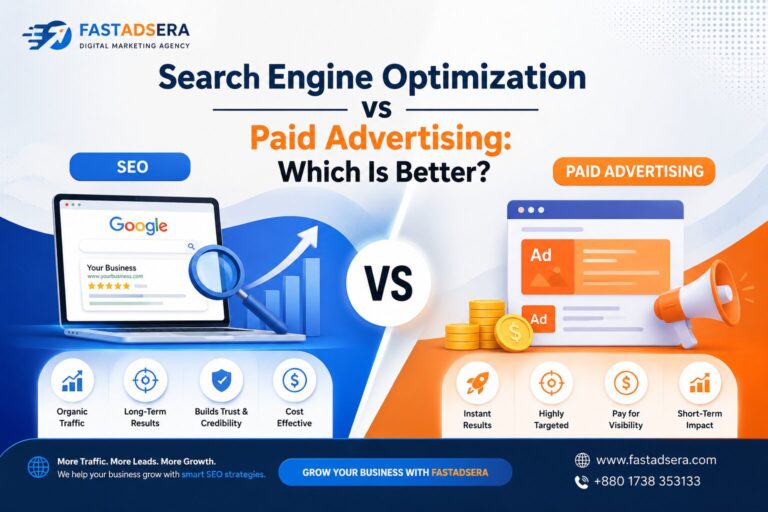
SEO vs Paid Advertising- The SEO vs Paid Advertising Battle SEO vs Paid Advertising It’s a battle many businesses waging to rank higher online and grow. Building brand awareness is an ongoing game, and search engine optimisation is essential for creating and expanding traffic, but on the flip side is the immediate boost provided by paid ads such as google ad management. For some this debate on SEO vs Google Ads, should I do Google Ads over SEO, is SEO better than Google Ads and will this get me business? Here we weigh up all you need to know when it comes to the benefits of both forms of digital marketing.
What Is Search Engine Optimization (SEO)?
Search Engine Optimization ( SEO ) is the process of optimizing a website to increase its visibility in search engine results and drive more organic ( non-paid ) traffic . SEO works by optimising the content, structure and technical performance of your website to help search engines like Google to understand your pages and rank them higher for relevant search queries. Instead of paid advertising, SEO is all about driving sustainable, long-term results that increase brand awareness, website traffic, and qualified leads.
Definition
Search Engine Optimization (SEO) is a digital marketing strategy to increase the ranking of a website on search engines such as Google, Bing and Yahoo. The main goal of SEO is to increase organic traffic by making your website more relevant, trustworthy, and user-friendly. SEO enables businesses to grow over the long term, reach their target audience and increase their online visibility – without paying for each click.
How SEO Works
Search engines use automated bots, often called crawlers or spiders, to find and index web pages. When a user searches for information, Google looks at hundreds of ranking factors to determine the most relevant results to show.
How SEO works is as follows:
- Crawling –Search engines find your web pages.
- Indexing – Your pages are in Google’s index for search.
- Ranking – Google ranks your content based on relevance, quality, user experience, and authority before showing it in search results.
Optimizing your website according to search engine guidelines improves your chances of achieving higher rankings and attracting more qualified visitors.
Types of SEO
SEO has a number of important areas that work together to improve your website’s performance and search visibility.
On-Page SEO
On-Page SEO is all about optimizing the elements that are on your website. This includes keyword research, high-quality content, title tags, meta descriptions, heading tags, image optimization, internal linking, and user-friendly URLs. Effective on-page optimization helps search engines understand your content and enhances user satisfaction.
Off-Page SEO
Off-Page SEO refers to the actions taken outside of your own website to enhance its authority and credibility. These strategies are high-quality backlinks, digital PR, guest blogging, social media promotion, brand mentions, and local citations. Good off-page SEO signals help search engines recognize your website as an authoritative source.
Technical SEO
Technical SEO Technical SEO covers a range of aspects which allows search engines to crawl, index and interpret your website. The components involve speeding up a site, ensuring mobile friendliness, HTTPS protection, XML sitemaps, Robots.txt setup, utilizing structured data ( Schema Markup ) and canonical tags as well as resolving crawl issues. Having a Technically optimized website also leads to better User experience which eventually helps improve your search engine rankings.
Local SEO
Local SEO- Local SEO stands for local search optimization, which works to get your business ranked for location-based searches and will likely be necessary for most brick-and-mortar or brick-and-click type businesses which cater to a specific local region. This consists of your Google Business Profile, having the NAP (name, address, phone number) be accurate and consistent everywhere, creating citations, customer review management, and use of local keyword phrases. The result is a better ranking for Google maps, Google places, and in local search results.
What Is Paid Advertising?
Paid advertising is a digital marketing approach where businesses pay to show ads on search engines, social media, and websites. It helps companies quickly reach their target audience, drive relevant traffic, and generate leads or sales.
Definition
How Paid Advertising Works
So, you set up a campaign, identify keywords or audience, budget for it and run ads. The platform then places ads on the user search or browser experience and boom – you get immediate clicks from interested prospects!
Popular Paid Advertising Platforms
Here are some advertising platforms where you can run paid advertising: – Google ads Facebook ads LinkedIn ads Instagram ads The advertising platform options may have very different target markets and methods to reach the right people. The most common platform to use for this is Google, Facebook, or LinkedIn.
Google Ads
Google Ads shows your business on Google Search, YouTube, and its partner sites. Perfect for connecting with people searching for your product or service right now.
Facebook Ads
Facebook ads are good for targeting Facebook ads can let businesses to define Facebook ad audiences based on demographics and interests as well as behaviours. They can run to build brand, engagement and brand engagement lead generating.
LinkedIn Ads
This form of B2B targeting LinkedIn advertising campaigns can really boost business when it helps people find professional network connections, qualified individuals, and leaders.
Instagram Ads
IThis ad uses captivating photos, videos, and Stories to target specific demographics. You can use it to promote goods, elevate your brand image, and stimulate sales.
Search Engine Optimization vs Paid Advertising:
Key Differences
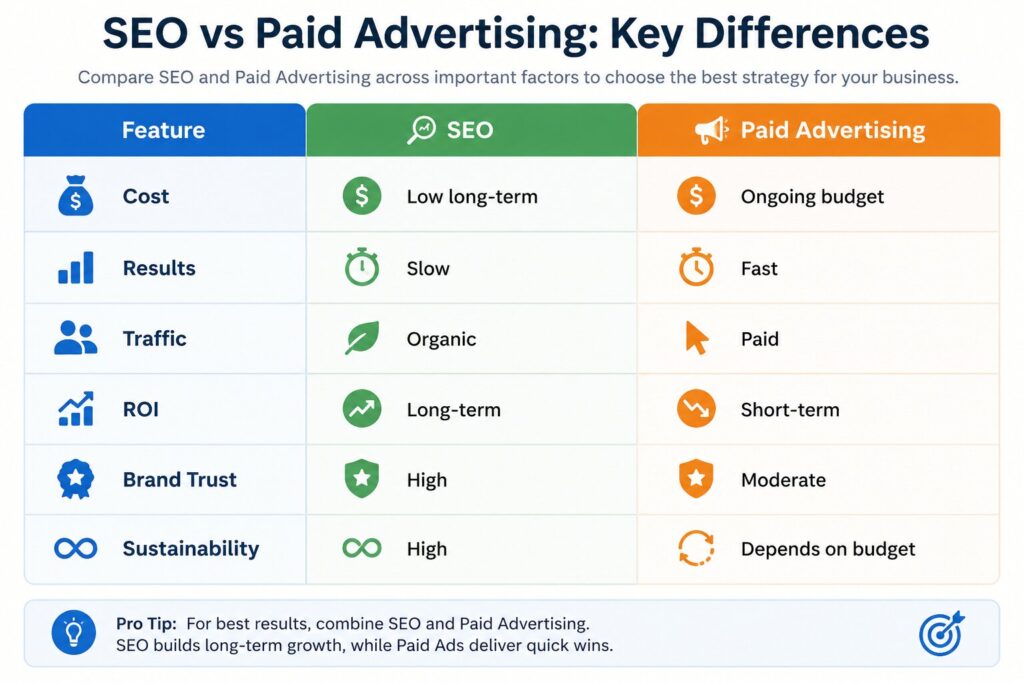
Understanding the Search Engine Optimization vs Paid Advertising comparison helps businesses choose the right digital marketing strategy. Below are the key differences between SEO vs paid advertising in terms of cost, results, ROI, and long-term growth.
Cost
SEO requires ongoing optimization but offers long-term value with lower costs over time. Paid advertising needs a continuous budget, and traffic stops when your ads stop running.
Speed of Results
SEO takes time to improve search rankings and organic visibility. Paid advertising delivers immediate traffic and leads as soon as your campaign goes live.
Long-Term Value
SEO provides sustainable results by building long-term organic search visibility. Paid advertising is effective for short-term campaigns but depends on ongoing ad spend.
Website Traffic
SEO generates consistent organic traffic from search engines. Paid advertising drives targeted traffic quickly through platforms like Google Ads.
Lead Generation
Paid advertising can generate leads almost instantly with targeted campaigns. SEO attracts high-intent users and delivers qualified leads over the long term.
Brand Awareness
SEO increases brand credibility by earning higher organic rankings. Paid advertising boosts brand awareness rapidly by placing your business at the top of search results.
Return on Investment (ROI)
SEO often delivers a higher long-term ROI because organic traffic continues without paying for every click. Paid advertising provides faster ROI but requires continuous investment.
Scalability
SEO scales gradually as your website gains authority and rankings. Paid advertising can scale immediately by increasing your advertising budget and targeting more audiences.
Advantages of Search Engine Optimization
- Long-term organic traffic
- Builds trust and credibility
- Higher ROI over time
- Sustainable business growth
Advantages of Search Engine Optimization
- Instant website traffic
- Quick lead generation
- Highly targeted audience
- Easy campaign optimization
Disadvantages of Search Engine Optimization
- Takes time
- Requires continuous optimization
- Competitive industries are challenging
Disadvantages of Paid Advertising
- Costs increase over time
- Traffic stops when the budget ends
- Requires ongoing campaign management
Which Strategy Is Better for Your Business?
Choose SEO If:
- You want long-term growth
- You have a limited budget
- You want sustainable traffic
Choose Paid Advertising If:
- You need immediate leads
- You’re launching a new product
- You have an advertising budget
Use Both If:
- You want the best long-term and short-term results
- You want maximum online visibility
SEO and Paid Advertising Together: The Winning Strategy
- How SEO and PPC complement each other
- Benefits of an integrated digital marketing strategy
Why Choose FastAdsEra?
- Professional SEO Services
- Google Ads Management
- Data-driven strategies
- Transparent reporting
- Customized digital marketing solutions
Frequently Asked Questions (FAQs)
- Which is better, SEO or Paid Advertising?
The SEO is for the organic long-term growth and authority that you’ll gain through the process. PPC is for the quick wins and immediate traffic to generate the fastest and shortest-term results. Many businesses choose to implement a mix of the two for the most beneficial outcomes.
2. Is SEO cheaper than Paid Advertising?
Yes, SEO generally costs less in the long run. While you’ll always need to invest money to run your paid ads, the SEO traffic keeps on coming long after you’ve done the work of optimizing your site.
3. How long does SEO take to show results?
Results for your SEO should begin to become apparent after 3 to 6 months, though this can vary on your website’s domain authority, industry, and competitor, along with the quality and SEO approach of your website content. If you are in an extremely competitive industry, you might expect it to take anywhere from 6 months to a year to begin seeing dominant ranks.
4. Is Google Ads better than SEO?
Google Ads is better for instant traffic and quick lead generation, while SEO is better for long-term organic growth and sustainable results. The best choice depends on your business goals, budget, and timeline.
5. Can I use SEO and Paid Advertising together?
Yes, usually SEO and Paid advertising working together give best results, because while the Paid advertising drives immediate leads and traffic and in same while SEO generates long term organic visibility and business.
6. Which strategy is best for small businesses?
For a small business, SEO is generally the ideal strategy for the future of your business, it generates organic leads and costs marketing money down the track. For immediate visibility or leads, it’s best to implement a strategy including Google ads andSEO.